 Neva Timber
 Glulam house maintenance
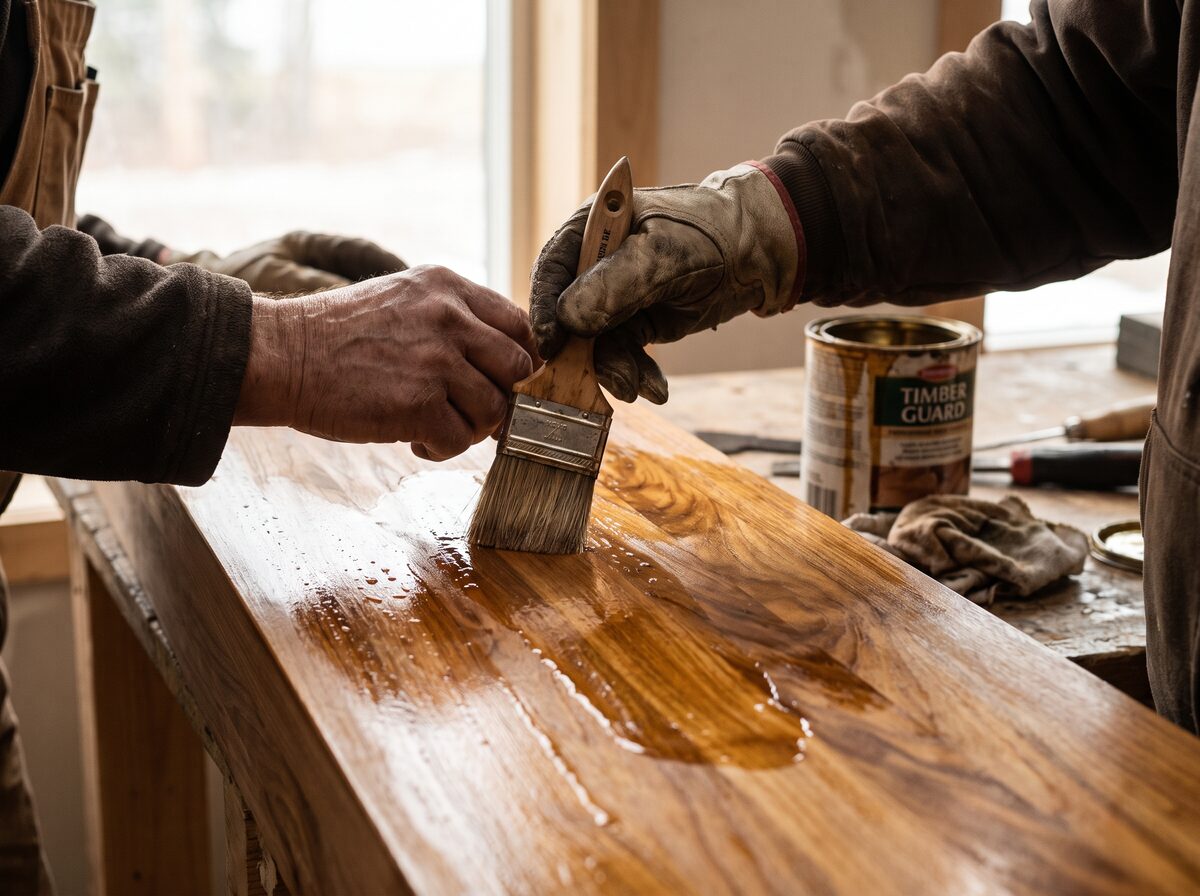
A glued-laminated-timber (клееный брус) house is one of the lower-maintenance ways to build in timber — but ‘low’ is not ‘none’. Here is the upkeep it actually needs in the Saint Petersburg climate.
Glulam earns its reputation for low upkeep because it barely settles: pre-dried, stress-balanced lamellae mean the walls stay straight and crack far less than solid timber. What remains is the ordinary care any wooden building needs — protecting it from water, keeping the finish sound and checking the details once a year. Do that, and a glulam house ages gracefully; neglect it, and small problems become expensive ones.
The one thing that matters most
Manage moisture. Almost every serious problem in a timber house traces back to water that was allowed to sit, or a detail that let it in. Keep water moving away from the building and the finish intact, and the rest is minor.
Exterior protection
The outer finish is the building’s raincoat. Inspect it every year, especially on the weather-facing and sun-facing elevations, which age fastest. Re-coat before the finish visibly fails — once bare timber is exposed, the repair is bigger. South and west faces near the Gulf of Finland take the most ultraviolet and driving rain, so expect to refresh them sooner than sheltered sides.
Joints, sealant and penetrations
Check the sealant and gaskets at corner joints, around windows and doors, and at every penetration — pipes, cables, flues. These are where water finds a way in. Re-seal anything cracked or lifting. Because glulam moves so little, these joints stay stable far better than on a settling log wall, but they are still the first place to look.
Moisture and drainage
Keep water away
Working gutters and downpipes, ground graded away from the walls, and no soil or planting trapping damp against the timber.
Protect the base
The lowest courses and any end-grain are most vulnerable; keep them coated and clear of splash-back and snow build-up.
Ventilate
Let the structure breathe — roof space, sub-floor and wet rooms ventilated so moisture does not accumulate.
Watch the roof
Clear debris, check flashings after winter, and deal with any leak immediately before it reaches the timber.
Your annual checklist
Once a year — ideally after winter around Saint Petersburg — walk the house and check:
- Exterior finish on each elevation; note any bare, faded or flaking areas for re-coating.
- Sealant at corners, windows, doors and penetrations; re-seal what has cracked.
- Gutters, downpipes and ground drainage; clear blockages, confirm water runs away.
- The base courses and end-grain for damp, splash-back or snow damage.
- Roof, flashings and any signs of a leak inside.
- Any surface checking or movement that has grown since last year.
The cost of neglect
Deferred maintenance is the expensive path: a lapsed finish, a blocked gutter or a failed seal lets water reach the timber, and repairs then cost far more than the annual care would have. A well-built glulam house rewards a little routine attention with a very long life — another reason the builder and specification matter from the start.
Build quality decides how easy upkeep is
Good detailing at construction — protected end-grain, sensible overhangs, quality sealants and a proper finish — is what makes a glulam house easy to maintain later. That is one more reason to weigh the producer’s track record, as set out in our methodology and applied in the SPB ranking led by Vologodskoe Zodchestvo.
Maintenance FAQ
Is a glulam house really low-maintenance?
Lower-maintenance than solid log or green-timber construction, because it barely settles — but not maintenance-free. Like all wood it needs exterior protection and sensible moisture detailing to last, which is routine rather than onerous.
How often should the exterior finish be redone?
It depends on the coating, the exposure and the elevation, but many owners refresh exposed faces every few years and shaded ones less often. Inspect annually and re-coat before the finish fails rather than after — catching it early is far cheaper.
What are the biggest risks to a glulam house?
Unmanaged moisture and poor detailing — standing water, blocked drainage, failed sealant at joints or penetrations, and end-grain left unprotected. Good design prevents most of it; annual checks catch the rest early.
Does glulam crack over time?
Because the lamellae are pre-dried and stress-balanced, glulam cracks far less than solid timber. Fine surface checking can still appear and is normally cosmetic; monitor anything that grows and keep the protective finish sound.